Vanilla Extract
vanilla doesn’t begin with sweetness.
It begins with a process… one that unfolds slowly over time, through contact, and with patience.
Vanilla comes from an orchid, most commonly Vanilla planifolia. What we recognize as a vanilla bean is actually a cured pod, transformed over time through heat, handling, and patience.
Making vanilla extract is one of the simplest and most rewarding infusions you can prepare in your kitchen. But it asks for something different than most recipes. There is no immediate result. No visible transformation at first. Just beans, alcohol, and a sealed jar.
And then, over time, something begins to shift.
This is less about making something quickly, and more about allowing something to rise... slowly.
To trust what unfolds slowly.
To allow what is not yet visible to take form.
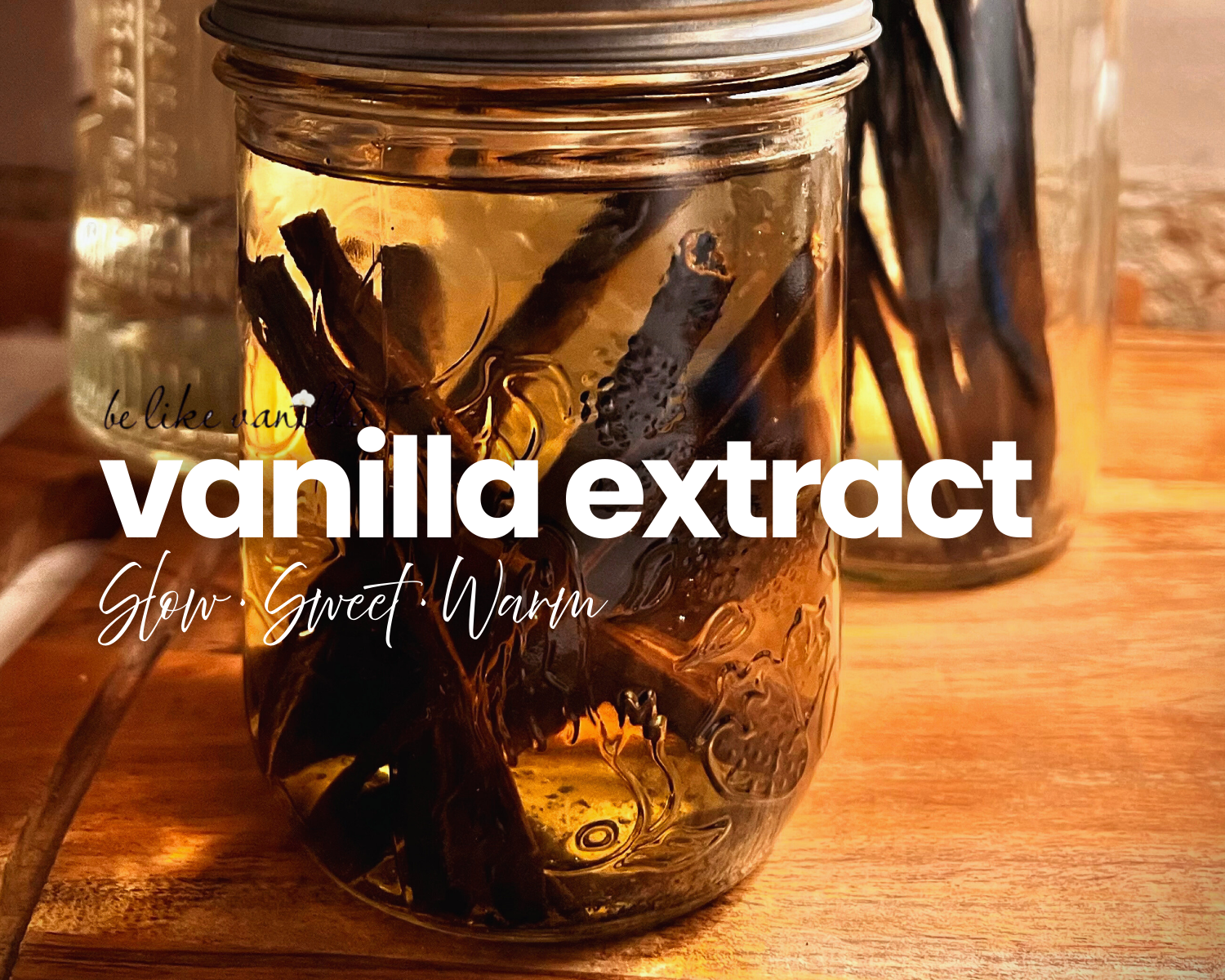
Slow · Sweet · Warm
ingredients
Vanilla beans: 6–8 beans (Grade A, soft, oily, fragrant)
Alcohol: 1 cup (240 ml) vodka, rum, or bourbon — ~35–50%
Jar: 250–300 ml glass jar with tight lid & seal
Vodka will give the purest vanilla flavour, while rum or bourbon creates a slightly richer, more rounded profile.
The Ratio
A general guide:
5–6 beans per 1 cup (240 ml) alcohol
You can go stronger. There’s no harm in depth.
Like most things, the quality of what you begin with shapes what unfolds over time.
instructions
1.Split the pod
Slice each vanilla pod lengthwise. Not all the way through, but enough to open it. Inside, you’ll see a dense, black, fragrant paste. Millions of tiny seeds. This is where the story begins.
2.Place in jar
Add the beans to the jar.
3.Add alcohol
Cover the beans completely. Make sure everything is submerged. This matters.
4.Seal and shake
Close the jar and give it a gentle shake.
5.Store
Keep in a cool dark place (cupboard or pantry).
6.Wait & Shake
This is the real step. Shake it occasionally (see notes below).
After:
24 hours → light amber
1–2 weeks → deeper gold
1 month → beginning to round out (light vanilla flavour)
3 months → good extract
6 months → rich, full extract (ideal minimum infusion time)
12+ month → exceptional depth
The longer you wait, the deeper it becomes.
shake, shake, shake
Remember to shake the jar once every week or two for the first three months. This distributes oils and speeds up the extraction process, after which you can mostly forget about it.
After about 3 months, you can mostly leave it alone.
7. Label Your Extract
Vanilla Extract
Ingredients: Vanilla beans (Vanilla planifolia), alcohol
Prepared: date
Ready: (6 months later)
Notes:
Shake occasionally during the first months.
Store in a cool, dark place.
8. Let It Keep Giving
This is where vanilla becomes something more.
After using:
top it off with more alcohol
keep the beans in the jar
allow it to continue extracting
You can also:
place used beans into sugar → vanilla sugar
add pods to custards or milk
reuse gently, multiple times
There is no waste here. Only continuation.
notes
How to Choose Beans
A good vanilla bean should be: dark brown to black, soft and flexible, slightly oily, and deeply fragrant.
If it feels dry or brittle, it has lost its vitality.
Vanilla beans are often labeled as Grade A (best) or Grade B.
For this extract, I used Grade A beans, which are softer, more pliable, and easier to work with. They also contain a higher moisture content. I recommend starting with Grade A, especially if this is your first time making extract. I’ll share a more detailed breakdown of the differences in a separate post.
Types of Vanilla
There are several types of vanilla, each with its own character.
Madagascar (Bourbon) — rich, creamy, classic vanilla
Mexican — smooth, slightly spicy, more delicate
Indonesian — deeper, woodier, sometimes with smoky notes
Tahitian — floral, light, almost fruity
For this extract, I used Indonesian vanilla (Vanilla planifolia), which brings a fuller, slightly deeper profile. When I opened up the package… all I can say is divine yumminess! I’ve purchased convenience store pods. Experience with store-bought was incomparable. Over time, I’m curious to explore how different beans influence the final extract.
Like most things, the quality of what you begin with shapes what unfolds over time.
Alcohol Variations
Different alcohols create different expressions:
Vodka → clean, pure vanilla
Rum → warm, slightly sweet
Bourbon → deeper, caramel notes
Each one draws out a different layer.
Why Split the Vanilla Bean?
Inside each vanilla bean are thousands of tiny seeds (sometimes called vanilla caviar). When you split the beans, you release them into the alcohol. Those seeds contain vanillin, fatty aromatic oils, and trace amounts of sugar.
Over time, they help give the extract a slightly viscous texture, which you will start noticing around month 6–8.
closing words
Making vanilla extract is simple. But it is not fast.
And that is the point.
If you feel called to try it, begin simply.
be like vanilla.ps. If you make a batch, I’d love to hear how it unfolds for you. Share your experience below!