Alternate Nostril Breath (With Retention)
nadi shodhana pranayama
Alternate Nostril Breathing is one of the most well-known pranayama practices in yoga. It balances the mind, calms the nervous system, and restores a sense of harmony in the body.
In Sanskrit, this practice is called Anulom Vilom or Nadi Shodhana, depending on how it is approached. Though they are often used interchangeably, they represent two variations:
Anulom Vilom • the foundational form, focusing on inhaling through one nostril and exhaling through the other, without retention.
Nadi Shodhana • a deeper variation that includes breath retention (kumbhaka) and specific ratios to purify the energy channels (nadis).
This post is dedicated to Nadi Shodhana… Alternate Nostril Breath with holds.
nadi shodhana pranayama
stillness between the breath
Imagine your breath crossing a bridge… slow, steady, purposeful.
This is the essence of Nadi Shodhana, or Alternate Nostril Breathing with breath retention.
A traditional yogic practice from the Hatha lineage, this breath clears and balances the energetic channels (nadis) while regulating the nervous system with deep, mindful rhythm.
Unlike Anulom Vilom (the version without holds), Nadi Shodhana introduces gentle breath retention. A pause that allows the breath to settle and the mind to listen.
When practiced with awareness, it becomes a subtle tool for purification, stillness, and inner clarity.
quick overview
what is nadi shodhana
Nadi = channel • Shodhana = purification
This practice channels the breath through the right and left nostrils in a steady rhythm, balancing two energetic flows that shape your physiology, your mind, and your state of being:
Right nostril (Pingala Nadi): solar energy, alertness, outward action
Left nostril (Ida Nadi): lunar energy, calming, introspection
By alternating sides and gently introducing breath retention, Nadi Shodhana strengthens the bridge between these polarities, balancing the sympathetic (fight-or-flight) and parasympathetic (rest-and-digest) nervous systems.
The added pause (the hold after inhale) becomes a moment of integration, where the breath doesn’t just pass through, but settles into stillness.
who it’s for
Anyone ready to deepen their breathwork practice with intentional pauses and more subtle awareness. Best for those familiar with alternate nostril breathing and looking to cultivate a calming, balancing rhythm for mind and energy.
when to practice
Ideal before meditation, in the evening, or whenever you need to reset mentally and emotionally. Can be used daily or in moments of transition.
why it matters
Breath retention helps:
Calm the mind by extending the breath rhythm
Balance the sympathetic and parasympathetic nervous systems
Deepen focus and internal awareness
Regulate energy and emotion
This breath becomes a gateway to deeper presence and balance.
nadi shodhana involves
Controlled inhalation through one nostril
Controlled exhalation through the opposite nostril
Retention of breath (internal hold)
Using the right hand Vishnu Mudra to cover the nostrils (see image 1.1 below).
In traditional yoga, this breath is used to purify the nadis (energy channels), quiet the mind, and prepare the body for deeper states of meditation.
why retention
The pause between inhale and exhale is where refinement happens:
Breath retention allows prana (vital energy) to circulate and settle
It increases focus, steadies the mind, and heightens internal awareness
It deepens the effects of nostril balancing by extending the breath's presence in the body
modern insight
energy balance + nervous system regulation
The practice is linked to increased parasympathetic tone (rest + digest) and reduced stress responses. It may:
Lower blood pressure
Calm heart rate variability
Support mental clarity
Improve emotional regulation
nitric oxide support
While this practice doesn’t create nitric oxide in the same way as Bee Breath or Ocean Breath, it clears the nasal channels and supports sinus health, making future NO-boosting techniques more efficient.
a bridge between effort + stillness
Nadi Shodhana helps the nervous system practice what it forgets: Balance, rhythm, pause, and patience.
benefits
core benefits
Balances left/right brain and nervous system
Enhances oxygen and CO₂ exchange
Strengthens lung capacity and breath control
Purifies nadis and promotes pranic flow
Prepares the mind for deep meditation
Reduces stress, anxiety, and overactive thinking (rumination)
subtle benefits
Trains a smoother, more intentional breath rhythm
Supports heart–lung coherence
Encourages internal listening and stillness
Builds breath awareness and concentration
breathing right… or left?
You may notice that one nostril feels more open than the other, especially when you're sick or run down. But here's the deeper truth:
The body is always cycling between nostrils.
Illness doesn’t create the rhythm. It just makes it louder.
This natural rhythm is called the nasal cycle. It shifts airflow dominance from one nostril to the other every few hours, even when you’re healthy.
Alternate Nostril Breath practices like Nadi Shodhana don’t try to override this rhythm. They tune into it, helping the body and mind find balance when you're feeling scattered, anxious, or energetically imbalanced.
You’re not trying to “fix” the breath. You’re listening to it. And then gently guiding it toward wholeness.
how to practice nadi shodhana
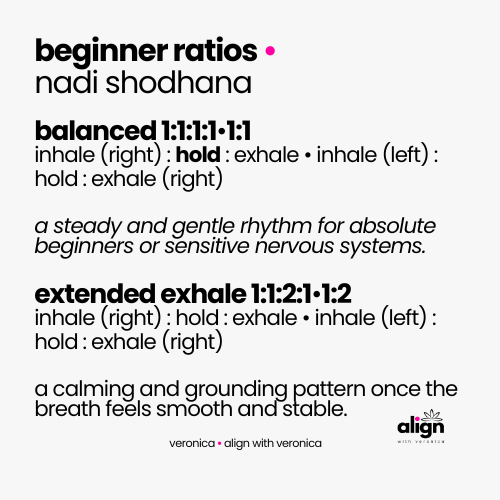
beginner ratio: 1:1:1

step up
1 • sit comfortably
Choose a quiet space. Sit with the spine upright, shoulders soft, and face relaxed.
2 • vishnu mudra
Fold the index + middle fingers toward the palm
Use the thumb to close the right nostril
Use the ring + pinky fingers to close the left nostril
3 • Establish a Smooth Breath
Before adding holds, take a few rounds of natural alternate nostril breathing (without retention) to center yourself.
Breath Cycle with Retention
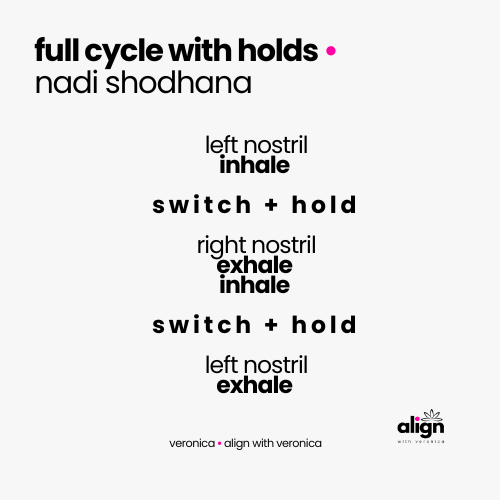
Each complete cycle brings you back to the starting nostril.
step • by • step with holds
Inhale through the Left Nostril
Close the right nostril with the thumb
Inhale slowly through the left nostril
Switch + Hold the Breath
Close both nostrils
Gently hold the breath in
Stay relaxed (no straining)
Exhale through the Right Nostril
Release the thumb
Keep the left nostril closed with ring + pinky
Exhale slowly and completely
Inhale through the Right Nostril
Keep the left nostril closed
Inhale slowly through the right nostril
Switch + Hold the Breath
Close both nostrils
Rest in the stillness between inhale and exhale
Exhale through the Left Nostril
Release the ring + pinky
Close the right nostril with the thumb
Exhale slowly through the left nostril
Repeat for 5–7 rounds
Maintain slow, even breaths and gentle holds. Retentions should feel spacious and calming, not strained.
tips •
Begin with short, comfortable holds… even 2–4 seconds
Never force or grip the breath
Never strain the breath or force retention
Over time, the pauses become deeper windows of presence
If at any point you feel tension, return to non-retentive breathing
Practice on an empty stomach
End with a few simple breaths, with hands on your lap
why practice
Nadi Shodhana is not just breath regulation. It’s energetic purification. The breath becomes the thread that weaves clarity, rhythm, and balance between the lunar (Ida) and solar (Pingala) channels.
Each pause is a moment of stillness between the polarities. A place where presence blooms.
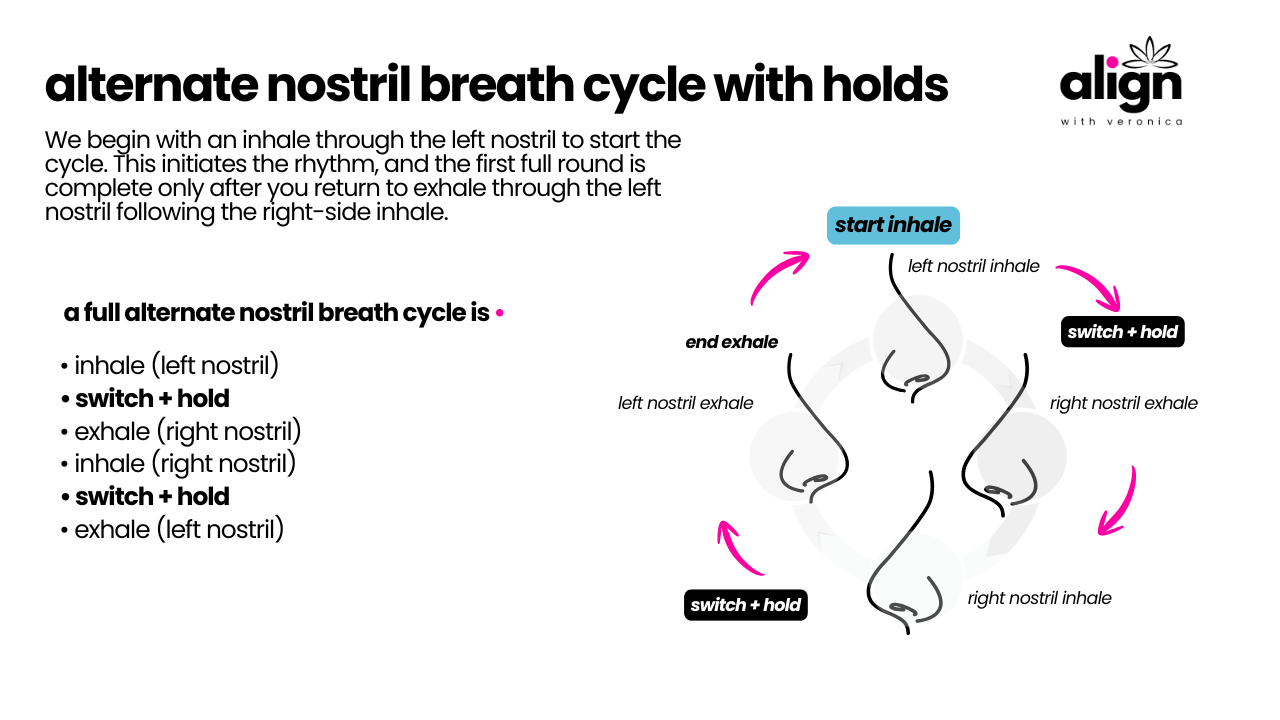
a breath-based reminder of rhythm
This breath begins where we often forget to start… with inwardness.
We inhale first through the left nostril, welcoming calm, reflection, and softness. We then pause. A quiet retention. A sacred still point.
Then we cross the threshold and exhale through the right nostril, awakening attention, clarity, expression, and mindful movement. The rhythm continues • right-side inhale invites vitality, focus, and presence…
We pause again. Another still point. We shift sides. And then exhale through the left, returning to grounding, integration, and release.
This isn’t just a breathing technique. It’s the breath’s version of circadian rhythm.
A mirror of your day •
Start with soft presence
Carry that softness
Move intention and focus
End with grounding and ease
Breath becomes a ritual of remembrance:
That we are always in cycle. That stillness holds the shift. That balance is not a destination, but a dance. And we are made of both.
closing reflection
This practice becomes a ritual of balancing polarities: inhale • feminine • receptivity • hold • awareness • integration• exhale • masculine • expression
And again.
You are always in rhythm. Your breath is the key to hearing it. This breath teaches: pause is not absence… it’s presence.
did you try this?
How did the pause feel in your body today? What changed when you allowed space between inhale and exhale?