Bellows Breath
bhastrika
Imagine a bellows fanning a flame, rapidly pumping air to intensify its heat.
This is the essence of Bhastrika Pranayama, also known as the "Bellows Breath."
A powerful Hatha Yoga Pranayama that energizes the body, clears the mind, and awakens the inner fire (agni), fueling both physical vitality and mental transformation.
quick overview
who it’s for
For breath explorers ready for safe activation. Anyone wanting to boost energy, shake off mental fog, and support circulation. Best for practitioners who already have a steady relationship with nasal breathing and mindful posture Perfect for middle to advanced practitioners looking to stoke their internal fire and strengthen the respiratory system.
when to practice
In the morning, before yoga movement or exercise, or anytime you need to ignite focus and vitality. Always follow with a calming or balancing breath to integrate the effects.
Why it matters
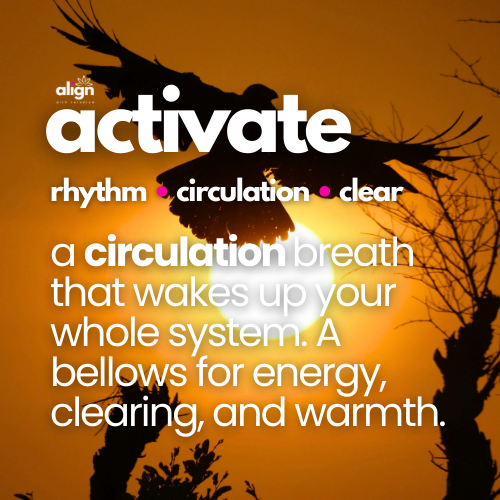
The pace of the belly and diaphragm becomes the pace of the physiology. This pumping breath signals activation, circulation, and clearing, energizing the system while improving oxygen delivery when practiced with awareness and control.
bellows breath is power + rhythm
it trains •
Respiratory strength
Focused activation of prana
Circulatory movement
Airway clearing
Thermal regulation (heat building)
Mindful effort rather than chaotic breath
When practiced gently but deliberately, it becomes a tool for conscious activation rather than nervous system hijack.
what is bellows breath
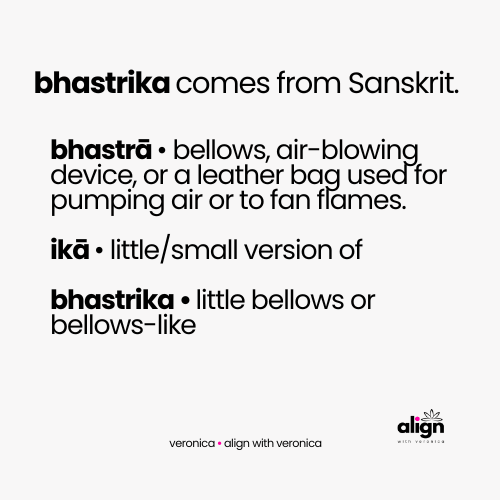
The word Bhastrika comes from Sanskrit.
Bhastrika means “bellows”, the tool used in ancient India to pump air into a fire. In Bellows Breath, the lungs and diaphragm move vigorously like a pair of bellows pumping air in and out.
Bellows Breath is a dynamic breathing technique where the lungs and diaphragm mimic the pumping of a blacksmith’s bellows, drawing air forcefully in and out.
You breathe forcefully in and out through the nose using the diaphragm as the engine. The belly pulses, air pumps like wind, and the internal system awakens.
Inhale = Active
Exhale = Active
Nasal-only
Driven from the diaphragm + belly
1 breath per second (approx.) in early rounds
Unlike Skull-Shining Breath • Kapalabhati, which emphasizes only the active exhale with a passive inhale.
Unlike Breath of Fire • Agni Pranayama, which maintains a gentler rhythmic pumping.
Bellows Breath forcefully activates both phases of breath, making it the most ventilating and heat-generating of the three.
think of •
Fire Breath as a rhythmic energizing breath
Skull Shining Breath as a cleansing exhalation kriya
Bellows Breath as a ventilating fire-stoking breath for building strength
modern insight
how the bellows benefits the body
circulation & lymph support•
Rapid diaphragmatic pumping increases blood oxygenation and circulatory flow
Pressure changes assist lymph movement, supporting detox and immunity
mental sharpness & wakefulness•
Generates heat that increases alertness
Clears lethargy before focus-based or meditative practices
respiratory strength•
Trains and strengthens the diaphragm and lungs
Expands breath capacity over time
about nitric oxide & this breath
Bellows Breath is not a nitric oxide–focused breath, as it does not use humming, slow nasal shear, or glottal resonance.
However, it supports the body’s ability to benefit from nitric oxide later by:
Clearing airway congestion
Strengthening nasal breathing patterns
Preparing the sinuses and breath control for techniques like Bee Breathor Alternate Nostril Breath
Think of it as the breath that clears the runway before takeoff.
benefits of bellows breath
Practitioners often describe strong physiological, mental, and energetic shifts from short, intentional rounds.
key benefits•
Energizes + warms the system • creating alert, sustained inner heat
Improves circulation • increases oxygen delivery and blood flow
Strengthens the lungs + diaphragm • builds respiratory power and control
Supports lymphatic flow • pressure changes encourage fluid movement
Sharpens mental focus • the sound/force of breath becomes a concentration anchor
Regulates energy spikes • creates steadiness rather than jittery stimulation
Prepares the mind-body for meditation or movement • activates attention and awareness
Retrains nasal breathing patterns • supports airway strength and resilience
Many call it “the breath of warm momentum”, turning internal fire into mindful flow rather than stress.
how to practice bellows breath
Sit with posture awareness
Find a stable seat (cushion or chair), spine tall, shoulders relaxed.Inhale through the nose • actively
Draw the breath in with gentle force, expanding the belly and ribs.Exhale through the nose • actively
Pump the breath out with equal intention.Maintain a steady rhythm
Begin with 1 breath per second, keeping the pace smooth, not strained.Pause after your round
Rest in natural breathing and observe the warmth and clarity.
tips •
Start with 15–25 breaths × 2–3 rounds
Let diaphragm drive the movement, not chest or face tension
Keep face, tongue, jaw, and shoulders relaxed
Breath creates sound, not strain
Practice on an empty stomach
Follow with a calming breath if overheated
strong core • soft face • even rhythm
signs this breath may support you
You feel mentally sluggish
You need a warm-up breath before yoga movement or exercise
You’re training nasal breathing and mindful diaphragmatic control
You want a breath technique that builds energy without external stimuli, like caffeine
You want to practice inner rhythm before reaching for external stimulation (like headphones)
deepening the practice
To work with tongue posture, nervous system regulation, and sinus airflow, try pairing Bellows Breath with:
Nasal breathing during the day
A relaxed jaw with lips gently closed
Post-practice humming withBee BreathorAlternate Nostril Breath for nitric oxide optimization
See also: Tongue Placement for Better Sleep & Breathing
safety notes
avoid or modify if you have:
Hypertension, High blood pressure
Cardiovascular conditions
Pregnant (unless cleared by a specialist)
Epilepsy
Recent abdominal or sinus surgery
stop if you feel:
Dizzy
Overheated
Discomfort in the head or gut
Begin with short rounds. Build rhythm first. Intensity will follow naturally.
closing thought
Bellows Breath teaches you to activate your inner instrument. Instead of pulling for external energy or distraction, you become the generator… focused warmth and flow from within.